
What You Need to Know
A bulging disc and a herniated disc are related but different findings. A bulging disc extends beyond its normal boundary, while a herniated disc involves a tear that allows inner disc material to protrude. Neither diagnosis automatically means surgery, and many disc abnormalities cause no symptoms at all.
Not every disc abnormality causes pain, and not every patient with a herniated disc needs surgery. The most important step is matching the symptoms, examination, and imaging before recommending treatment.
— J. Alexander Holbert, MD
What Is a Spinal Disc?
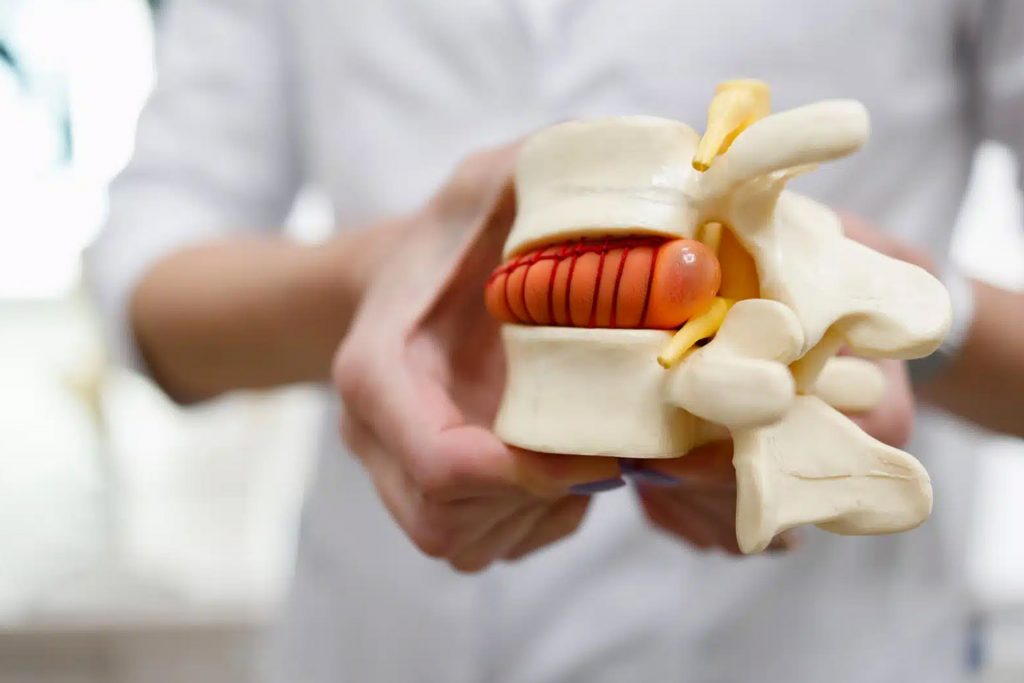
Spinal discs sit between the vertebrae and act as shock absorbers. Each has a tough outer layer and a softer center. Aging, repetitive stress, genetics, and injury can change the structure of a disc over time.
What Is a Bulging Disc?
A bulging disc occurs when a broad portion of the disc extends beyond its usual boundary. The outer layer remains generally intact. Bulging discs are common on imaging and may not cause pain unless they narrow the space around a nerve or the spinal canal.
What Is a Herniated Disc?
A herniated disc occurs when the outer layer develops a tear and a portion of the inner material pushes outward. If the herniation irritates or compresses a nerve, it can cause radiating pain, numbness, tingling, or weakness.
What Symptoms Can Disc Problems Cause?
A disc abnormality in the neck may cause neck pain, arm pain, hand numbness, or weakness. A lumbar disc problem may cause back pain, sciatica, leg numbness, or weakness. Symptoms depend on the location and whether a nerve is involved.
Is a Herniated Disc More Serious Than a Bulging Disc?
Not necessarily. A small herniation directly compressing a nerve may cause significant symptoms, while a larger bulge may cause none. Severity is determined by the patient’s symptoms and neurologic findings—not by the imaging label alone.
Can a Herniated Disc Heal?
Many patients improve as inflammation decreases and the body gradually resorbs some of the herniated material. Recovery time varies, and treatment should be guided by symptoms and neurologic function.
How Are Bulging and Herniated Discs Treated?
Initial treatment may include physical therapy, anti-inflammatory medication, activity modification, home exercises, and injections. Surgery may be considered when weakness progresses, symptoms remain disabling, or significant nerve compression does not improve with appropriate treatment.
When Is a Disc Problem an Emergency?
Seek emergency care for loss of bowel or bladder control, saddle numbness, rapidly worsening weakness, inability to walk, or severe pain after major trauma.
How Is the Diagnosis Confirmed?
A diagnosis is based on the history, physical and neurologic examination, and imaging when appropriate. MRI can show disc abnormalities, but the findings must match the patient’s symptoms before they are considered the source of pain.
Key Takeaways
✓ A bulging disc and a herniated disc are different findings.
✓ Many disc abnormalities cause no symptoms.
✓ The severity of symptoms depends on nerve involvement, not the imaging label alone.
✓ Most patients improve without surgery.
✓ MRI findings must be matched to the clinical examination.
Frequently Asked Questions
Is a bulging disc the same as a herniated disc?
No. A bulging disc typically involves a broad extension of the disc without a focal tear, while a herniated disc involves a defect in the outer layer that allows inner material to protrude. Both can be painless or symptomatic depending on nerve involvement.
Can a bulging disc become a herniated disc?
It can. Degenerative changes may weaken the outer disc over time, and a tear can develop. However, many bulging discs remain stable and never become symptomatic.
Can a herniated disc heal without surgery?
Yes. Many herniated discs improve with conservative care as inflammation subsides and the body resorbs some of the protruding material. Surgery is considered for persistent disabling pain, progressive weakness, or severe nerve compression.
Does every herniated disc require surgery?
No. Most patients are initially treated without surgery. The decision depends on symptom severity, neurologic findings, functional limitations, imaging, and response to conservative treatment.
Can an MRI show a disc problem that is not causing pain?
Yes. Disc bulges and even herniations are common in people without symptoms. This is why MRI findings must be correlated with the pain pattern, examination, and neurologic findings before treatment is recommended.
What activities should I avoid with a herniated disc?
Avoid activities that clearly worsen radiating pain, numbness, or weakness, particularly repetitive bending, twisting, or heavy lifting. Complete bed rest is usually not recommended. A clinician or physical therapist can provide individualized guidance.
About Dr. J. Alexander Holbert
Dr. J. Alexander Holbert is a fellowship-trained orthopaedic spine surgeon based in Pennsylvania. Patients from across the United States seek his expertise for the evaluation and treatment of cervical and lumbar spine conditions. He is committed to evidence-based, individualized care that helps patients understand their diagnosis, consider appropriate treatment options, restore function, and improve quality of life.
Ready to Take the Next Step?
If you’re experiencing persistent symptoms, don’t wait for them to interfere with your quality of life. A comprehensive evaluation can help identify the underlying cause of your pain and determine the treatment approach that best fits your condition, lifestyle, and goals.
Contact Dr. J. Alexander Holbert today to schedule a comprehensive evaluation and take the first step toward lasting relief.
Medical Disclaimer: The information provided in this article is intended for general educational and informational purposes only and should not be considered medical advice. Every patient and medical condition is unique. Reading this content does not establish a physician-patient relationship and should not replace a consultation with a qualified healthcare professional. If you have questions about your health or are experiencing symptoms, please seek an evaluation from a licensed medical provider. If you are experiencing a medical emergency, call 911 or go to your nearest emergency department immediately.